After a swimsuit and a passport, a great camera should be next on the
packing list for any vacation. You’ll want a sharpshooter that can take
great photos in any setting, without weighing you down or emptying your
wallet before you leave for the airport. A few types of cameras are especially great for vacation photography, and we’ve highlighted some of our favorite models below.
Travel Zooms
So-called travel zooms are pocket-sized cameras with huge zoom
ranges—incredibly convenient for casual vacation snapshooting, from
broad vistas of the Amalfi Coast to close-ups of the Notre Dame
gargoyles. They’re basically beefed up point-and-shoots with price tags
to match, but the out-of-box versatility and carry-anywhere portability
make them capable travel companions.
Canon’s SX260 packs a 20x zoom lens into a slim, pocketable body. It’s a versatile travel companion.
Our top-ranked travel zoom of 2012 is the Canon PowerShot SX260 HS. It packs a massive 20x zoom lens, excellent image and video quality for the class, in-camera
GPS for geo-tagging, and one of the most user-friendly interfaces in the business. The Sony Cyber-shot HX30V is a solid second choice, offering similar specs and superior video capture, if slightly softer details in still images.
Tough Cams
What do beach bums, rock climbers, and snowboarders have in common?
Their vacation destinations could wreck their cameras. For peace of
mind, it’s a wise idea to invest in a rugged digital camera. These
cameras are waterproof, shockproof, dustproof, and freezeproof—not
totally indestructible, but tough enough to withstand most adventures.
The Olympus TG-1 is an excellent all-around camera in a waterproof, shockproof body.
Image quality is usually a weak point with these cameras, especially indoors. But the Olympus Tough TG-1
flips that notion on its head. It’s a great compact that also happens
to be built like an Abrams tank. It’s more expensive than any of its
peers, but it’ll be money well-spent. We also like the Sony TX20, a truly ultra-compact camera that can survive a dip in the pool.
Mirrorless System Cameras
What’s that rule about over-packing? Ah, right—don’t do it.
DSLR
cameras take great photos, but they can be too big and bulky for your
carry-on luggage. Travel with a mirrorless compact system camera
instead. They’re much smaller and lighter than traditional DSLRs and
offer stunning image quality to match their oversized peers.
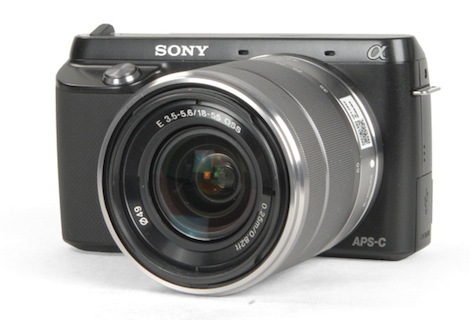
The Sony NEX-F3 is a fantastic entry-level system camera, smaller and lighter than a regular DSLR.
Any of the current Sony
NEX-series cameras will make trusty companions for vacationers. The entry-level
NEX-F3 is a fantastic camera for the price, and most casual photographers will find plenty to love here.
The Olympus OM-D E-M5 is another hugely popular mirrorless camera. It offers a more traditional
DSLR
shooting experience in a body that’s still compact enough for comfy
travel. It also costs $1,299 with a lens, but hey, at least you’ll know
not to blame the camera if your vacation pics turn out badly.
…And The Rest
•
DSLRs: Some photographers can’t live without the dead-on autofocus, optical viewfinders, and traditional feel afforded by a proper
DSLR.
There’s certainly something to be said for that, and they’re generally
the most capable cameras out there. But we think that most casual
photographers who want to go the interchangeable-lens route will be
happier with a smaller, lighter mirrorless camera.
•
Superzooms: These big cameras offer enormous focal
ranges, comfortable handling, and great control. But they’re basically
giant point-and-shoots, way too big to fit into a pocket. That’s why we
prefer travel zooms for vacation photography. Superzooms make sense for a
safari, where you spend most of the day sitting and waiting for
something to happen. A system camera with a telephoto lens is a better
(albeit very expensive) option in this case.
•
Cheap Compacts: And as for low-zoom, low-cost
pocket cameras—well, there’s a reason they’re dying off. In the past,
they were the only affordable options. But that same amount of money now
buys a shooter with a huge zoom range, a tough-cam, or even an
entry-level system camera. If you don’t want to spend more than $200 on a
new camera, you’re better off saving your money for souvenirs.