Friday, September 28, 2012

Shelter ByGG by Gabriela Gomes

Shelter ByGG is a pod designed by Gabriela Gomes. The project concept was to bring the living space out to the public area. The rounded eye-catchy pod is to function both as a sculpture and a habitat. The pod features a double bed and a toilet and is made of Oriented Strand Board-(OSB) engineered wood-based panel and cork.

The interior is made of interchanging light and dark brown with visible cork texture. The pod also features a small compact sink and a shower fixture. There are three different-sized round windows near the bed that let some natural light in.
Shelter ByGG is also sustainable as it was made of recycled materials and uses solar energy. The sculpture pod will be exhibited as an installation at Guimarães 2012 Made-In International Competition.


Magical Hus-1 by Torsten Ottesjö

Hus-1 by Torsten Ottesjö is a magical compact house that has interesting architecture. Built to fit into the surrounding environment Hus-1 is made of eco-friendly materials. The idea was to create a house for two people that seamlessly fits the natural sight of the Swedish West Coast. A compact abode has built-in furniture making it easier to move the house from sight to sight.


Hus-1′s architecture is both compact and beautiful. The lines and shapes are unconventional and attractive. 25 square meter house has a curved shape and made of two convex walls and two glazed walls that make an entrance and a back wall. The leaf-shaped entrance creates a feeling of magic, as if the house has come out of a fairy tale. The house has a kitchen and a sleeping area.
The interior is painted white and finished with wood. The house exterior is fully covered with wood tiles except the glazed back wall and an entrance that provide the house with natural lighting. There is also a small window located at the side of the structure to let some light into the sleeping area.

Pros & Cons Of Architecture

Inflatable architecture is gaining more popularity as it makes for convenient temporary structures that are easy to erect and move, plus they can look more attractive than regular tents. The inflatable architecture began in the 1960s with inflatable structures created for various events and exhibitions. Today inflatable architecture has definitely evolved in terms of shapes and designs but durability is still an issue making inflatable structures temporary.

The advantage of inflatable structures is that they can be spacious as well as attractive. They can be erected anywhere as well as easily moved from place to place making them perfect for museum exhibitions and cultural or private events like wedding receptions and birthday parties. There are, of course, new technologies that make it possible to integrate an inflatable structure with more durable and sturdy parts

 Another plus of inflatable structures is versatility. They can be used as gazebos, tents, art galleries, reception venues, art installations, temporary housing and other. They can be located anywhere providing with covered space in case of bad weather as well as thanks to modern elaborate designs inflatable structures can look stylish and beautiful.


Buisson Residence On Lake Anna

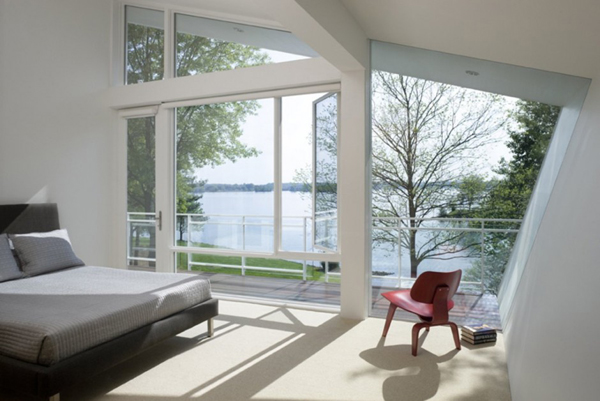
Located in Central Virginia Buisson Residence stands on Lake Anna reflecting in its tranquil waters. Designed by Robert M. Gurney the house looks unusual due to its slanted roof. The house structure consists of the two “L”-shaped brick walls that enclose the living spaces that feature glazed walls. The living and sleeping areas are divided into public and private zones while the first level features an open layout.

The lake can be seen from several rooms of the house. The open living area and kitchen are glazed so that not only lake but the pine forest can be seen from inside. Outdoors are organically embrace the house which is surrounded with trees and green lawns.
The house is structured to protect the first level from heat. The overhanging structure provides shade for a first level in summer and also feature built-in lights that illuminate the area at night.
The specific features of the Buisson architecture provides interesting angles and shapes in the interior. For instance, the hall at the second level features an angled ceiling and entrance into the bedroom which results in interesting geometric glazed wall facing the lake with an access outdoors.
Some areas of the residence enjoy the privacy of the solid walls but the beautiful lake views are available even from the bathroom. The interior is modern and clean in one theme with the house architecture. The outdoors feature a deck and an access to the house surroundings.


Leighton Meester’s New Home in Encino, California

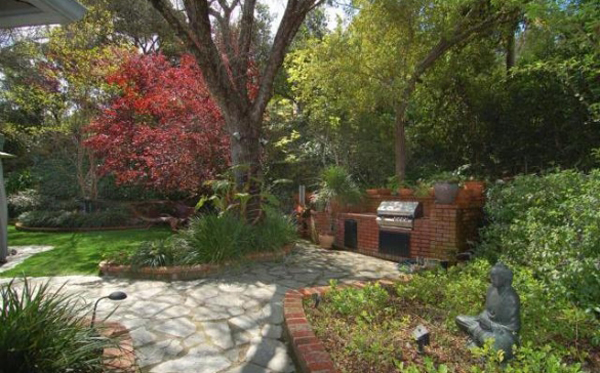
house in Encino, California for $1,457,500. The 1948 estate features 2,847 square feet, pool and pool, a barbecue. Encino is located in the San Fernando Valley, Los Angeles. The house has four bedrooms and four and a half bathrooms, a pool with cabana, bathroom and kitchenette, and a brick barbecue. It also features fireplace, French doors, and an outdoor covered lounge area.

The hardwood flooring contrasts with colored walls, white frames and furniture. The living room and the bedroom are equipped with the fireplaces. The bathrooms are made in different styles and color schemes. The kitchen is separated from the living room with a transparent glass and features cabinetry and an eating area.
The outside lounge area is covered and features track lighting and curtains as well as cabinetry and a sitting area. The master bedroom has a walk-in closet. The house also has a home office.
The interior design and decor are made in accordance with the previous owner’s tastes so it is probably be to be renovated or at least upgraded.


Luxury Leaf House by Mareines + Patalano = Arquitetura

Casa Folha or The Leaf House has been designed by Mareines + Patalano = Arquitetura. Considering the humid climate in southern Rio Mareines + Patalano = Arquitetura have chosen a perfect building type to create a luxury house inspired by Brazil’s Indian architecture. The cooling system is provided naturally with the wind and the house features open rooms that help connect with the nature around.


We see it as low-tech ecoefficiency, where it has the greatest impact, the concept of the architectural design. Our practice, luckily in agreement with our client, understand the idea of a tropical beach house as a mean to enhance the interaction between man and nature, trying whenever possible not to separate them completely.

Leaf House by Mareines + Patalano = Arquitetura has a truly amazing design. Its roof is built in form of leafs that also serve as shed for an above water highlighted terrace with the lounge area and beautiful greenery sights.
The wind cooling system is possible due to high open spaces in the house which vary from 3 to 9 meters. Thus natural ventilation makes this paradisaical place true eco-friendly. The rain water can be harvested from the roof. The interior is finished with organic materials without many dividers so the place looks open and huge.